什么是Comparable
public interface Comparable<T> {
/**
* Compares this object with the specified object for order. Returns a
* negative integer, zero, or a positive integer as this object is less
* than, equal to, or greater than the specified object.
*
* <p>The implementor must ensure <tt>sgn(x.compareTo(y)) ==
* -sgn(y.compareTo(x))</tt> for all <tt>x</tt> and <tt>y</tt>. (This
* implies that <tt>x.compareTo(y)</tt> must throw an exception iff
* <tt>y.compareTo(x)</tt> throws an exception.)
*
* <p>The implementor must also ensure that the relation is transitive:
* <tt>(x.compareTo(y)>0 && y.compareTo(z)>0)</tt> implies
* <tt>x.compareTo(z)>0</tt>.
*
* <p>Finally, the implementor must ensure that <tt>x.compareTo(y)==0</tt>
* implies that <tt>sgn(x.compareTo(z)) == sgn(y.compareTo(z))</tt>, for
* all <tt>z</tt>.
*
* <p>It is strongly recommended, but <i>not</i> strictly required that
* <tt>(x.compareTo(y)==0) == (x.equals(y))</tt>. Generally speaking, any
* class that implements the <tt>Comparable</tt> interface and violates
* this condition should clearly indicate this fact. The recommended
* language is "Note: this class has a natural ordering that is
* inconsistent with equals."
*
* <p>In the foregoing description, the notation
* <tt>sgn(</tt><i>expression</i><tt>)</tt> designates the mathematical
* <i>signum</i> function, which is defined to return one of <tt>-1</tt>,
* <tt>0</tt>, or <tt>1</tt> according to whether the value of
* <i>expression</i> is negative, zero or positive.
*
* @param o the object to be compared.
* @return a negative integer, zero, or a positive integer as this object
* is less than, equal to, or greater than the specified object.
*
* @throws NullPointerException if the specified object is null
* @throws ClassCastException if the specified object's type prevents it
* from being compared to this object.
*/
public int compareTo(T o);
}
- 是一个接口,定制排序规则
- 对实现它的每个类的对象进行整体排序,里面compateTo方法是实现排序的具体方法
- 比如TreeSet、SortedSet、Collections.sort()方法调用进行排序
- String、Integer等类默认实现了这个接口,所以可以排序
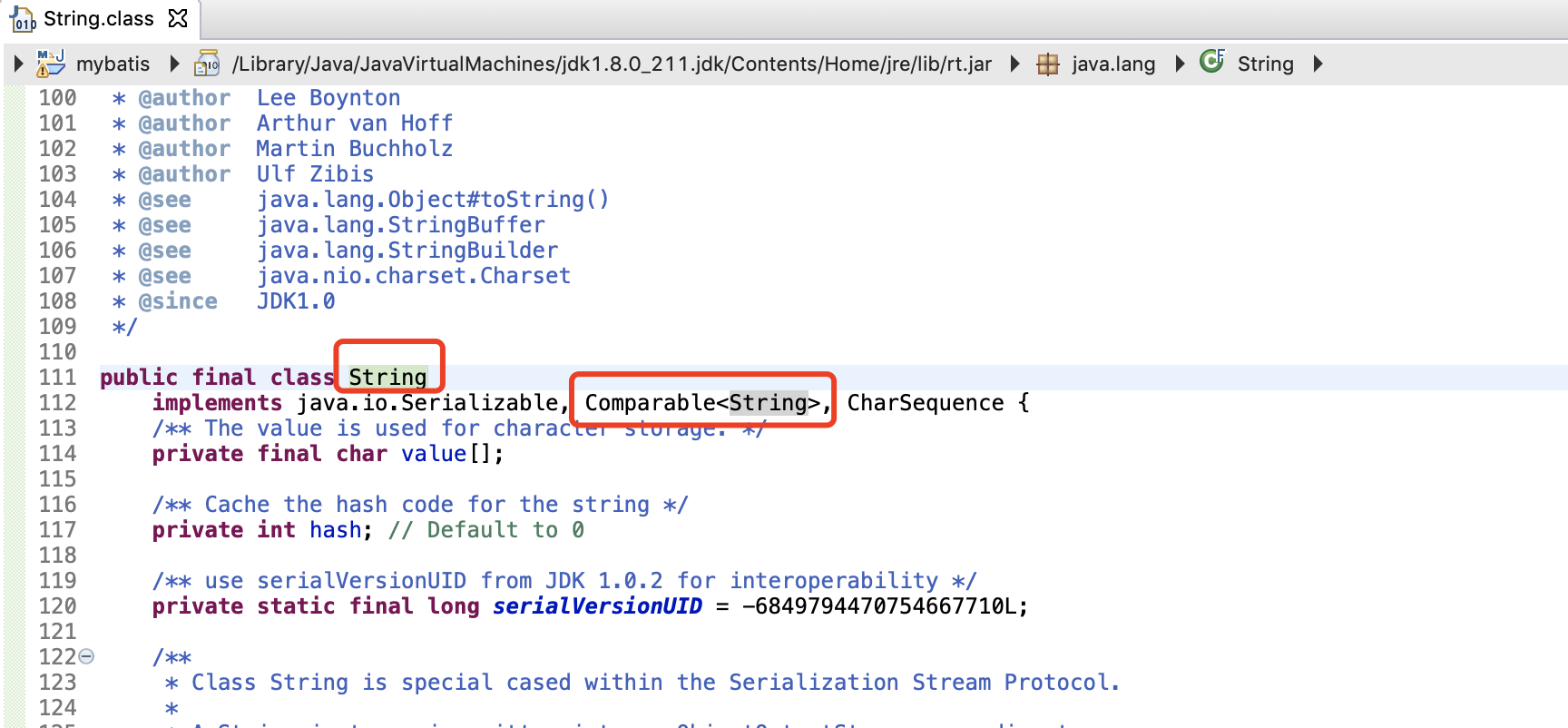
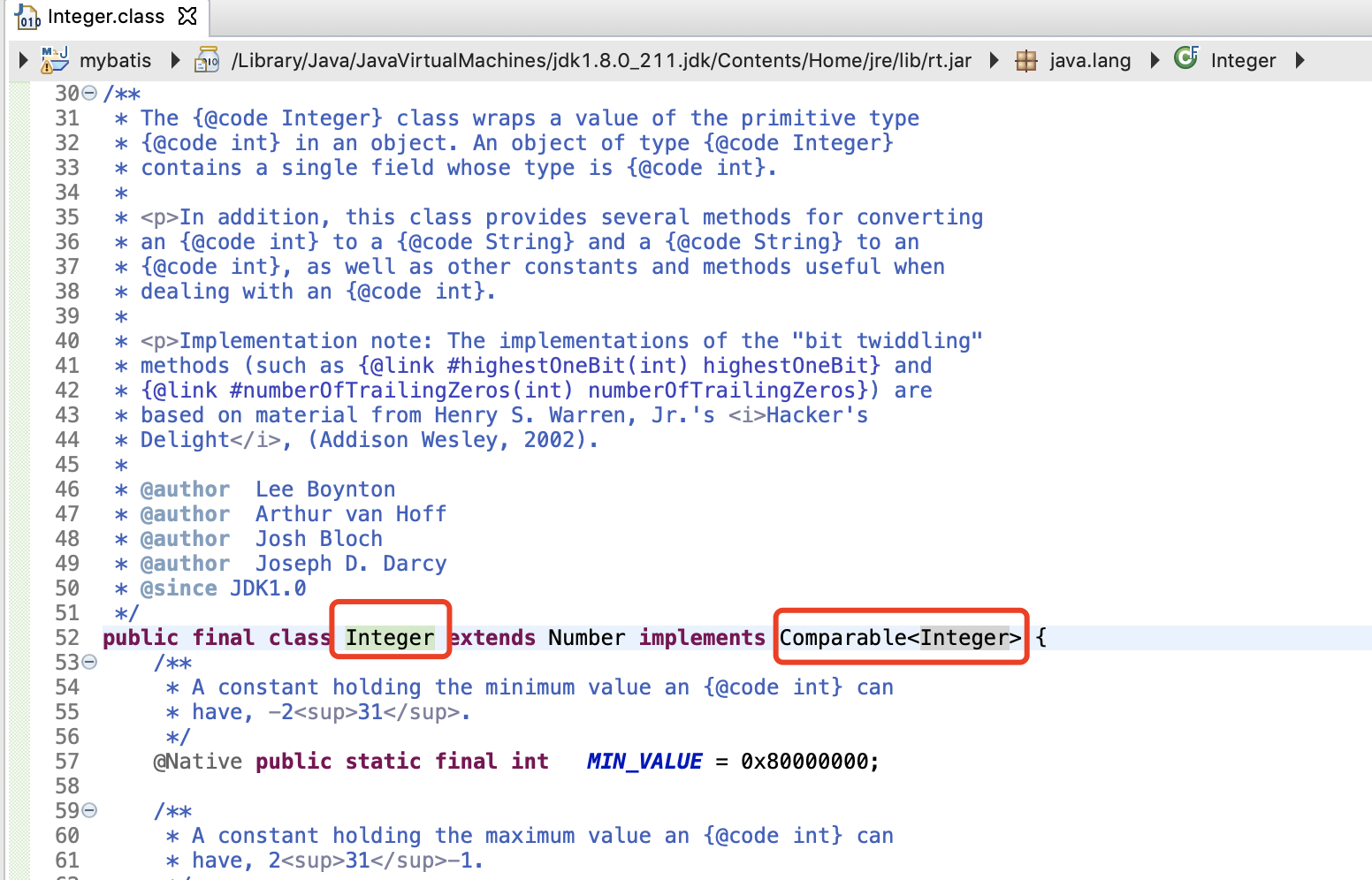
compareTo方法
用于比较次对象和指定对象的顺序,o为要比较的对象
返回int类型
- 大于0,表示this大于传进来的对象o,则往后排,即升序
- 等于0,表示this等于传进来的对象o
- 小于0,表示this小于传进来的对象o
案例
根据学生的年龄进行排序
import java.util.ArrayList;
import java.util.Collections;
import java.util.List;
import java.util.Set;
import java.util.TreeSet;

public class TestCom {
    public static void main(String[] args) {
        Set<Student> studentSet = new TreeSet<>();
        studentSet.add(new Student("jack", 32));
        studentSet.add(new Student("tom", 22));
        studentSet.add(new Student("mary", 35));
        studentSet.add(new Student("tim", 11));
        studentSet.add(new Student("tony", 49));
        studentSet.add(new Student("dd", 30));
        System.out.println(studentSet);
        System.out.println("==============================");
        List<Student> studentList = new ArrayList<>();
        studentList.add(new Student("jack", 32));
        studentList.add(new Student("tom", 22));
        studentList.add(new Student("mary", 35));
        studentList.add(new Student("tim", 11));
        studentList.add(new Student("tony", 49));
        studentList.add(new Student("dd", 30));
        System.out.println(studentList);
        Collections.sort(studentList);
        System.out.println(studentList);
    }
}

class Student implements Comparable {
    private int age;
    private String name;

    public void setAge(int age) {
        this.age = age;
    }

    public int getAge() {
        return age;
    }

    public void setName(String name) {
        this.name = name;
    }

    public String getName() {
        return name;
    }

    public Student(String name, int age) {
        this.name = name;
        this.age = age;
    }

    @Override
    public String toString() {
        return "Student{" + "age=" + age + ", name='" + name + '\'' + '}';
    }

    @Override
    public int compareTo(Object o) {
        if (o instanceof Student) {
            Student student = (Student) o;
            return this.age - student.age;
        }
        // 返回的数是0代表两个对象相同
        return 0;
    }
}